
Capstone expects the Trump administration to maintain a pro–artificial intelligence, hands-off regulatory posture in 2026, with states and courts stepping in to fill the gap through targeted restrictions and case-by-case rulings. We also anticipate a transactional approach to semiconductor export controls, allowing chipmakers to continue selling advanced hardware to China, alongside continued federal support for data center development despite growing local opposition.
Outlook at a Glance
- As the Federal Government Focuses on Investing in AI Rather Than Policing, States and Courts Will Fill the Regulatory Gap
- White House Will Continue Dealmaking for Shipments of Advanced Chips as Export Controls Rulemaking Slows, Though Restrictions on Capital Equipment Will Stay
- Despite the White House’s Pro-AI Policies, State and Local Resistance Will Stall Data Center Projects Over Environmental and Affordability Concerns
As the Federal Government Focuses on Investing in AI Rather Than Policing, Courts and Narrowed State Laws Will Fill the Regulatory Gap
| Winners | Amazon.com Inc. (AMZN), Oracle Corp. (ORCL), Microsoft Corp. (MSFT), and Alphabet Inc. (GOOG), Palantir Technologies Inc. (PLTR), Reddit Inc. (RDDT) |
| Losers | Workday Inc. (WDAY) |
Capstone believes the Trump administration will prioritize developing the US AI industry by expanding the US government’s role as a major AI customer and by continuing to deregulate the industry. In our view, Congress is unlikely to pass AI legislation in 2026, including any preemption of state AI regulation. While the Trump administration will likely try to preempt state AI regulation through executive order (EO), we believe the effort will ultimately be struck down by the courts. Without federal AI legislation, federal courts will shape the regulatory landscape, and states will continue to generate a patchwork of narrow AI regulation.
Federal Government
Capstone anticipates that the US government will remain a major AI customer and support AI infrastructure development in the coming year. In the aftermath of significant staff attrition across the federal government in 2025, the Trump administration and agency leadership have continued to signal that they see AI as a key resource in backfilling diminished federal capacity. In August, Gregory Barbaccia, the government’s chief information officer (CIO), indicated that he expects AI to mitigate staffing shortages, and the Securities and Exchange Commission (SEC) reportedly is restructuring around incorporating AI into workflows.
The White House’s AI Action Plan gives a clear directive to increase the usage and availability of AI across the federal government. At the end of November, the administration announced the Genesis Mission, a Manhattan Project-style AI program that, if funded in the FY27 budget, would make the US government one of the primary users of AI cloud compute.
Given the administration’s focus on leveraging AI and supporting the industry, we do not expect federal AI regulation in 2026. The Trump administration has indicated support for a moratorium on state AI regulations, and a draft EO has circulated that would make $42.5 billion in state Broadband, Equity, Access, and Deployment (BEAD) funds contingent on state AI deregulation. However, we believe the EO will not survive court challenges and that Congress will not be able to agree on the scope of a state AI regulatory moratorium.
AI Litigation
As clear legal standards for the training and use of AI, established through a federal statute, are likely years away, Capstone believes that litigation remains the driver of de facto regulation in the AI space. AI companies like OpenAI, Microsoft Corp. (MSFT), Anthropic, Perplexity, and others face a growing number of class actions around issues such as copyright infringement, data scraping, privacy, and AI discrimination. (See Capstone’s AI Litigation tracker for live coverage of these cases.)
In his July speech following the release of the AI Action Plan, which did not address copyright issues, Trump said that stringent copyright enforcement for AI training would be unsustainable and would prevent the U.S. from competing with China in the AI race. However, Trump administration officials later reportedly clarified that decisions around the legality of unauthorized AI training should be left to the courts, echoing the Copyright Office’s May 2025 report on AI training. Therefore, with the courts leading the way, the outcomes of these copyright infringement cases will likely shape the path forward for future AI legislation and large language model (LLM) development practices.
Federal judges have continued to handle copyright infringement and data scraping lawsuits on a case-by-case basis, in line with our expectations following the Copyright Office’s report that concluded that “some uses of copyrighted works for generative AI training will qualify as fair use, and some will not.” However, recent court decisions in Bartz v. Anthropic and Thomson Reuters v. Ross Intelligence suggest that judges are increasingly ruling that the use of pirated or unlicensed content is illegal.
These judicial opinions have led, and will increasingly lead, AI developers to invest in legally acquired datasets and to be more inclined to pursue licensing deals to minimize potential liability from infringement allegations. We expect these agreements, which could include revenue-share contracts, to serve as settlements in ongoing litigation, especially since the bar for monetary settlements was set high by Anthropic’s $1.5 billion settlement in Bartz v. Anthropic. The increase in demand for licensing deals will benefit companies holding large amounts of user-generated data, such as Reddit Inc. (RDDT), which already receives 10% of its annual revenue from just two licensing agreements.
Federal courts are also determining where liability lies in AI-related discrimination cases. In the US District Court for the Northern District of California, Judge Rita Lin allowed a class action, Mobley v. Workday, Inc., to move forward on a novel theory of liability, in which Workday Inc. (WDAY) could be held liable for alleged employment discrimination as an agent of its customers due to the role its AI-enabled tools allegedly play in hiring-related decision making. We expect the parties in the case to settle in 2026 and for copycat litigation to follow in areas where similar discrimination protections exist, like housing and consumer credit
State Regulation
In the absence of federal regulation, states are working to fill the gaps, primarily by addressing constituent concerns. While some states have tried to pass comprehensive AI regulations—most notably Colorado’s AI Act (SB 24-205), which places restrictions on model training—states have generally shifted toward passing narrow AI bills focused on specific issues. These bills have focused on healthcare, employment, and education, including Illinois HB 3773, which prohibits AI-driven employment discrimination and takes effect January 1, 2026. In our view, state legislatures will continue to focus on these areas for AI regulation in 2026.
White House Will Continue Deal-Making for Shipments of Advanced Chips as Export Controls Rulemaking Slows, Though Restrictions on Capital Equipment Will Stay
| Winners | Advanced Micro Devices Inc. (AMD), ASML Holding NV (ASML), Nvidia Corp. (NVDA) |
| Losers | Applied Materials Inc. (AMAT), Lam Research Corp. (LRCX) |
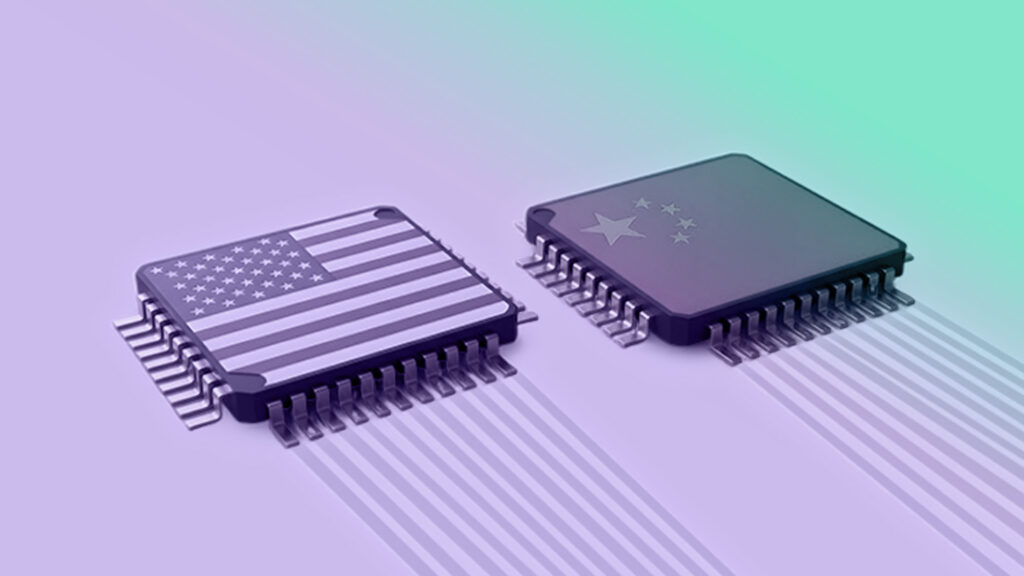
Capstone believes the Trump administration will continue to pursue policies liberalizing exports of the US AI technology stack internationally, but will seek visibility into these shipments through the licensing framework. Furthermore, while Trump has eased the government’s approach to controlling end products such as Nvidia integrated circuits (ICs), we do not expect a comparable shift in posture toward semiconductor manufacturing equipment (SME) and other chokepoint technologies.
China
Despite Trump’s initial desire to allow Nvidia to ship some Blackwell chips to China, the president was ultimately persuaded by more hawkish members of his Cabinet to refrain from raising the issue during a meeting with President Xi. Still, the underlying appetite persists, as expectations are growing that the Commerce Department will approve H200.
Separately, Treasury Secretary Scott Bessent has suggested that the US could eventually approve an even more powerful product. This is likely to create flashpoints with Congress, which has recently sought to assert greater oversight of licensing decisions, including through the proposed GAIN AI Act, which would give lawmakers a 30-day window to block export licenses for advanced AI chips destined for adversarial nations.
While the US may continue to relax export controls on advanced ICs, we do not expect a parallel easing of restrictions on SME tools, a nuance that we believe is underappreciated. The administration continues to engage allies, including the Netherlands and Japan, on servicing and maintenance controls, while more hawkish stakeholders, such as the United States House Select Committee on Strategic Competition between the United States and the Chinese Communist Party, press for broader restrictions on lithography systems. Nevertheless, US partners may interpret the administration’s softer rhetorical posture towards China as affording some incremental breathing room.
Other Countries
We also expect the Trump administration to expedite efforts to approve chip shipments to third countries. In a November 2025 press release announcing the authorization of licenses to G42 in the United Arab Emirates (UAE) and Humain in Saudi Arabia, the Bureau of Industry and Security (BIS) signaled it will continue supporting “the export of the American AI technology stack to Saudi Arabia, the UAE, and other allies and partners around the globe.”
Despite the White House’s Pro-AI Policies, State and Local Resistance Will Stall Data Center Projects Over Environmental and Affordability Concerns
| Winners | Amazon.com Inc. (AMZN), Alphabet Inc. (GOOGL), Meta Platforms Inc. (META) |
| Losers | CoreWeave Inc. (CRWV), Nebius Group NV (NBIS), IREN Ltd. (IREN) |
Capstone believes local and state governments will increasingly resist data center expansion, citing concerns over utility costs, water consumption, and land use. This creates hurdles to development despite concerted efforts by the Trump administration to streamline data center permitting.
The Trump administration has established itself as pro-AI infrastructure, most notably through its announcement of the Genesis Mission, a Manhattan Project-style initiative accelerating AI-driven scientific research. Additionally, a Trump EO aimed at easing permitting restrictions on data centers signals a whole-of-government approach to removing supply-side constraints on AI infrastructure, primarily creating structural advantages for large, established hyperscale cloud providers by streamlining federal permitting for qualifying projects meeting either a 100 MW load threshold or a $500 million capital expenditure commitment. Despite federal efforts, state and local opposition remains a binding constraint.
Congress is unlikely to ease the data center development process by preempting state and local governments or even streamlining federal processes. While Congress could theoretically accomplish this through National Environmental Policy Act (NEPA) streamlining for AI-designated projects or grid interconnection fast-tracking via the Federal Energy Regulatory Commission (FERC), such proposals have faced steep opposition, making a sweeping state and local preemption highly unlikely.
State-Level Dynamics
States have competed aggressively to attract data center investment through generous tax incentives, primarily sales and use-tax exemptions on equipment purchases. However, the political calculus is shifting as states confront the fiscal and infrastructure costs of unconstrained data center growth—forgone revenue compounds while ratepayer concerns mount. Virginia, for example, has forgone substantial tax revenue since creating its exemption in 2008: $1 billion in FY24 alone and $2.7 billion over the last decade. States such as Georgia and Washington have moved to reassess this relationship, introducing legislation and establishing task forces to address tax incentives, grid impacts, and carbon-neutrality goals.
Local Governments: Successful Opposition and Core Grievances
At the local level, community opposition has proven capable of blocking or substantially delaying even multibillion-dollar projects. For emerging AI cloud providers like CoreWeave Inc. (CRWV), incremental delays incur costs they cannot absorb as easily as legacy hyperscalers such as Amazon, Alphabet’s Google, and Microsoft.
Recent tracking suggests local resistance is widespread, stalling over $160 billion in investment across 24 states, including high-profile setbacks in late 2025, such as the court-blocked Digital Gateway in Virginia and Google’s withdrawn proposal in Indiana.
Common themes in successful data center opposition campaigns include higher utility bills, water consumption, noise, property values, and green space preservation. These concerns have proven potent enough to override the economic development arguments that previously dominated local zoning debates.