


UK utilities have faced intense public scrutiny in recent years due to outdated infrastructure, repeated environmental failures, and rising consumer bills. Utilities have, as a result, become highly politicised, with their private ownership status increasingly seen as the driver of poor performance.
This growing backlash has led the UK’s Prime Minister, Andy Burnham, to call for “greater public control of utilities,” marking a clear step change in the sector’s regulatory outlook. The government will clarify the ambiguity of “public control” only at the end of 2026, creating significant uncertainty for utility investors in the interim; however, we believe a return to full state ownership is highly unlikely.
UK utilities have not been under public control since 1989 when they were privatised by then-Prime Minister Margaret Thatcher’s Conservative government. Under the current regulatory system, the government sets the overarching policy direction, which the regulator then translates into targets and output measures for regulated energy and water networks via five-yearly price controls. The regulator sets a spend allocation for each regulated network to deliver on these targets, with the costs recovered via consumer bills.
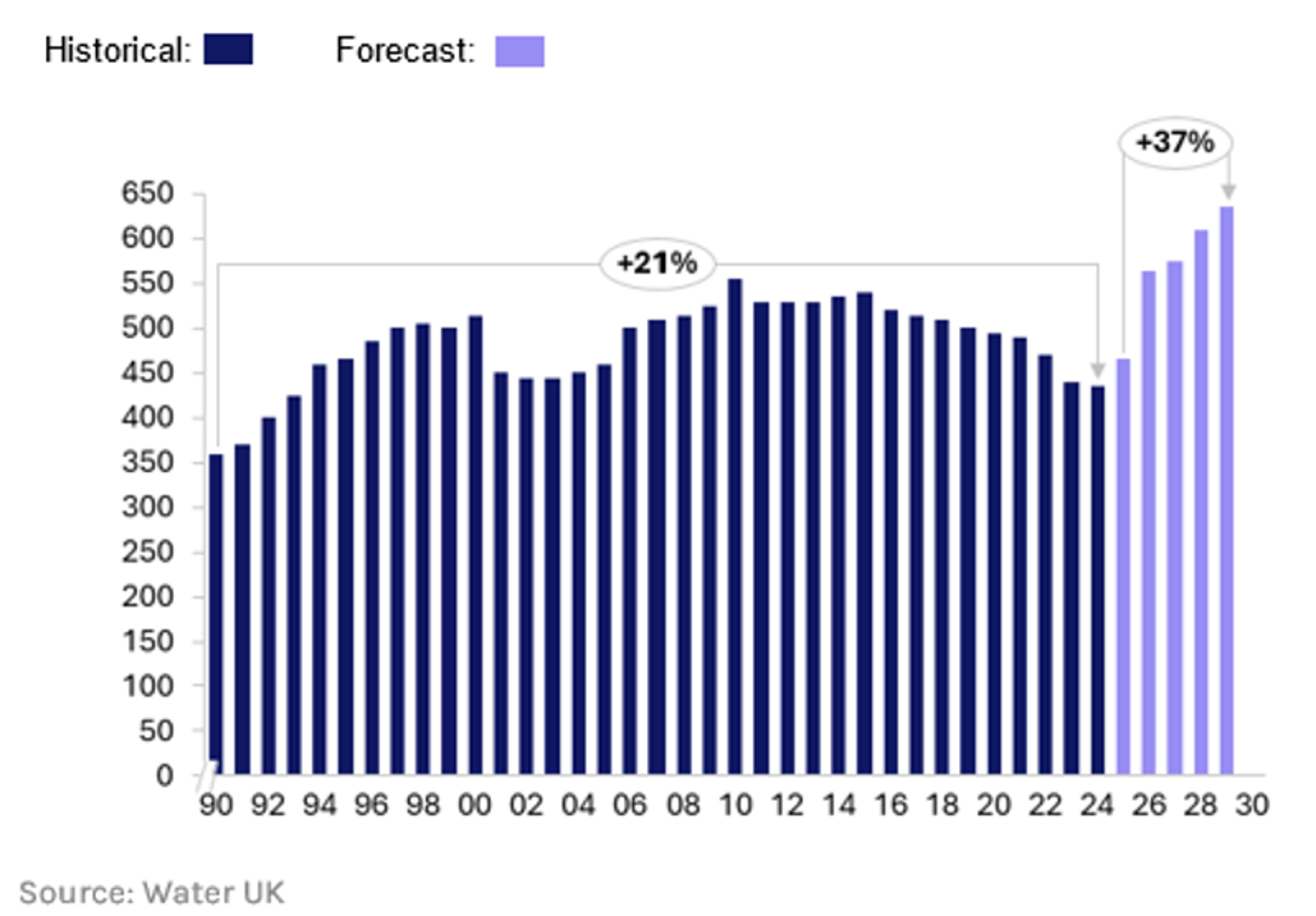
Support for private ownership of these networks is at an all-time low, driven by rising consumer bills without perceived performance improvement, and this is particularly acute in the water sector (see chart below). The ongoing Thames Water corporate finance restructuring has brought the company to the verge of temporary nationalisation via a Special Administrative Regime (SAR), further pushing consumer sentiment toward increased public control of utilities.
Average Water and Wastewater Household Bills, £, 1990–2030, real terms
Net Support for Nationalisation of UK Water Companies by Voter Preference, 2024
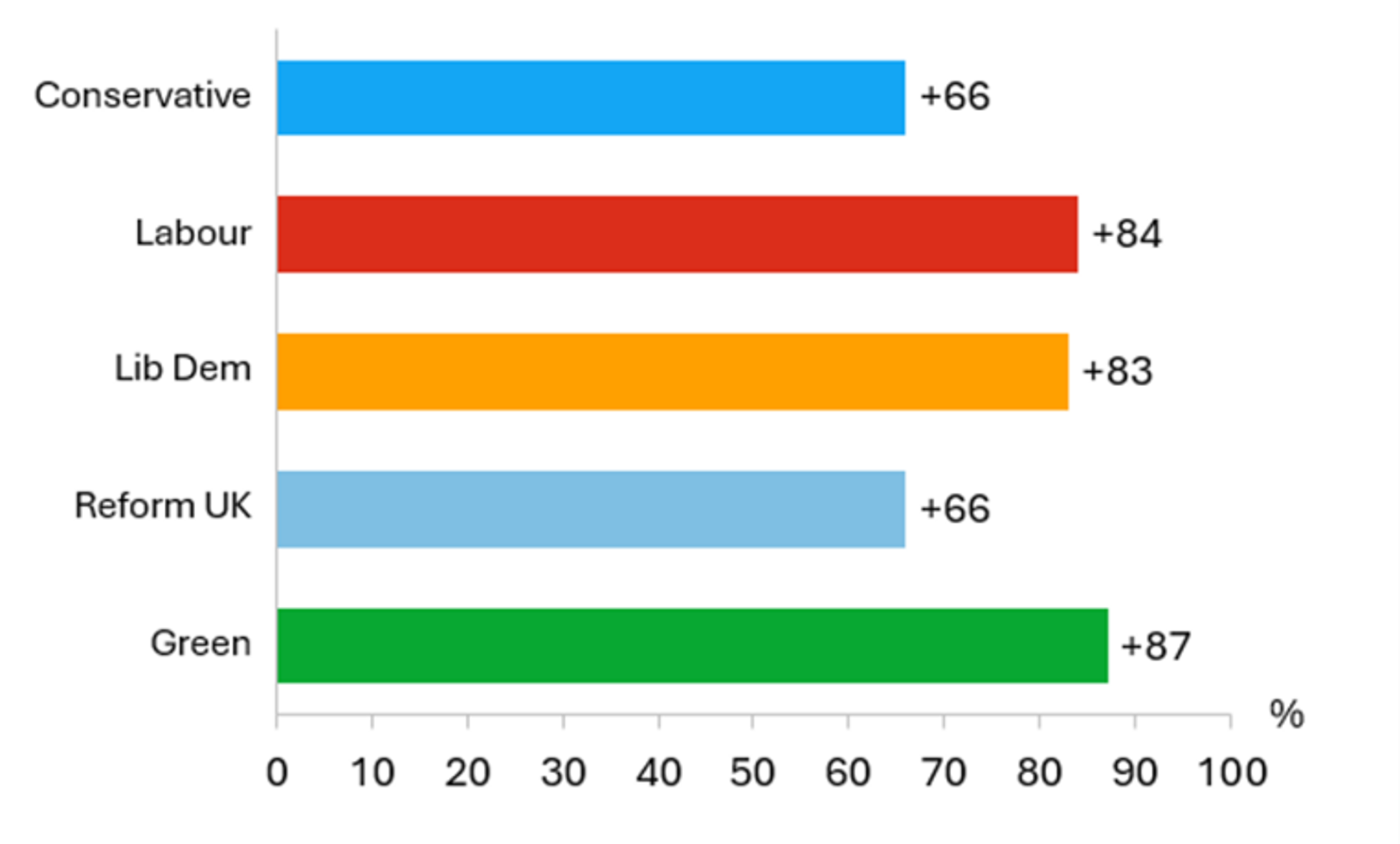
Source: YouGov Politics
Burnham’s pledge to strengthen public control therefore responds directly to this growing social unrest; however, the government has yet to clarify what greater public control will materially look like, with multiple options still under consideration.
The table below shows potential scenarios for “greater public control” and how we believe investors will be impacted.
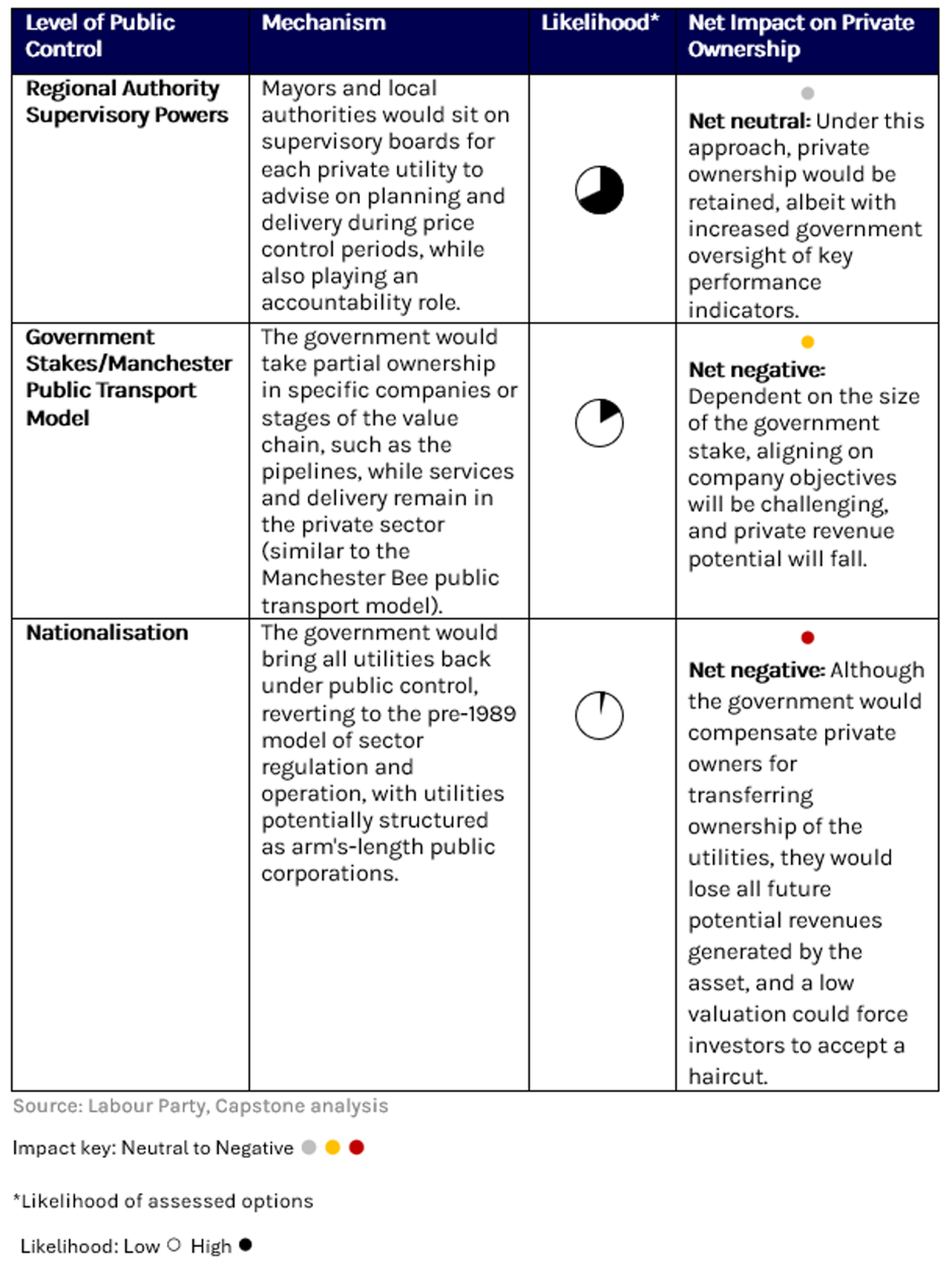
We believe outright nationalisation is unlikely to progress, as this would be incompatible with the UK’s fiscal position. Given the UK’s broader support for free markets, nationalisation would incur substantial pushback from the private sector, damaging the country’s investment attractiveness. In addition, it would be difficult to adopt this approach across all regulated utilities; instead, we are more likely to see specific companies in financial distress being brought under public control, similar to the recent wave of government acquisitions of steel companies.
We do not expect the government to take partial ownership stakes across all utilities, as this would create the same challenges as in a nationalisation scenario. The government could endorse the Manchester Bee Network approach (public ownership of buses under Burnham’s Mayoral term), where the state owns the core infrastructure while private companies handle services and operations. However, its application to larger water and energy networks is highly complex given the scale of the asset base.
We believe the regional supervisory board scenario, directly lifted from the Cunliffe review, is the most likely outcome. Although this approach is the least interventionist, the increased accountability and scrutiny of fund allocation could drive tighter margins and increase the incidence of clawbacks.
The UK government is expected to outline its policies for increased public control in the 10-year plan, which will be published by the end of 2026. Separately, the government recently engaged in talks with Thames Water to discuss the options for the company’s financial restructuring, including the potential SAR. However, the government is expected to announce an outcome only after the Autumn Budget on 28 October 2026.
Capstone will continue to closely track developments and their implications across sectors.
Read more from Capstone’s Energy team:
This Year’s Governors Races Will Give Data Center Investors a Message
The Risks and Implications of the USDA’s Expanded Land Disclosure Rule
How Wastewater Policies May Tighten Around Data Center Developers