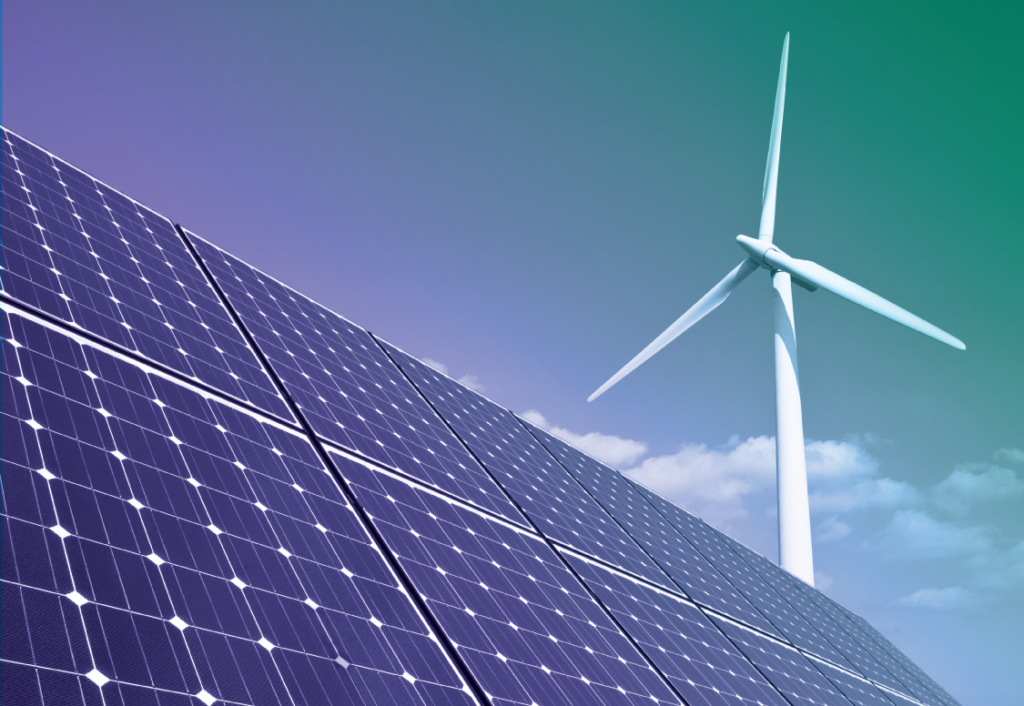

Capstone believes the EU will maintain its electricity pricing mechanism following the upcoming 19th-20th March European Council, benefitting low-cost power producers, such as solar and wind. These producers generate electricity at a fraction of the cost of gas-fired plants, but are paid the same higher wholesale rate set by these gas plants. Member State-level action poses a contained risk.
- Energy-intensive industries have been pushing for EU electricity market reform as average EU electricity costs hit ~$105/MWh in 2025, more than double US levels. These industries are hoping the 19th–20th March European Council will deliver a change to the merit order, the EU’s mechanism for setting electricity prices. Under this mechanism, wholesale rates are set by expensive gas-fired plants, allowing solar and wind firms to earn rates well above their costs.
- The Commission overhauled the electricity market in May 2024, and we do not expect it to pursue further comprehensive reform this soon, with the merit order likely to be kept intact until at least 2028.
- With the merit order intact, low-cost power producers will retain their pricing advantage. While Member States can take unilateral action to reshape domestic electricity pricing—for example, Italy’s recent energy decree is projected to cut annual merchant solar revenues by ~30%—this presents a more contained risk.
A Deeper Look
European heads of state will convene on 19–20 March for a European Council that the Commission has framed as a decisive moment for electricity market reform. However, we believe it will fall short of that ambition. The European Commission adopted a comprehensive Electricity Market Design reform as recently as May 2024, and despite intensifying political pressure from energy-intensive industries and high-profile national interventions such as Italy’s energy decree (the Decreto Bollette) in late February, Capstone believes a fundamental overhaul of how wholesale electricity prices are set is unlikely before 2028.
Instead, we expect the Council to produce a package of measures that preserves the current pricing mechanism, redirects attention toward national-level tax and network charge reductions, and defers structural reform to a consultation process that is unlikely to produce legislation before 2028.
For investors, the primary risk is not EU-wide market redesign, but individual Member States moving unilaterally, undermining the investment case for both subsidised and merchant-generation assets across the continent.
Why European Electricity Costs Remain High
Electricity costs for energy-intensive industries in Europe remain structurally elevated, but the debate over why, and what to do about it, is deeply divided. In 2025, the EU average stood at approximately USD 105/MWh, more than double US levels and around 40% above China and India (see Exhibit 1). Notably, the gap within Europe is equally stark: German costs (~USD 110/MWh) are nearly 70% higher than French ones (~USD 65/MWh), reflecting the extent to which the national generation mix (not EU market design) drives price outcomes. This divergence within Europe weakens the case for EU-wide market reform and strengthens the argument for national-level action on taxes and network charges.
Exhibit 1: Estimated Final Electricity Prices for Energy-Intensive Industries, 20251
| EU Average | ~105 |
| Germany | ~110 |
| France | ~65 |
| United States (Texas)2 | ~45 |
| China | ~75 |
| India | ~75 |
Source: IEA | Note (1): National averages mask significant regional variation, particularly in the US and China. Estimated final electricity prices for large industrial customers in energy-intensive industries (>150 GWh annual consumption). Includes wholesale price, network charges, taxes, and EU ETS indirect cost compensation where applicable. (2): Texas is used as the US benchmark as it is the IEA’s reference market for energy-intensive industrial electricity prices, reflecting the state’s high concentration of energy-intensive industry and its deregulated wholesale market, the most directly comparable to European liberalised markets.
In February 2026, Europe’s energy-intensive industries reinvigorated the Antwerp Declaration’s momentum by demanding a €50/MWh benchmark for total industrial electricity costs, a figure set deliberately below the pre-crisis average.
Crucially, the €50/MWh figure is not a demand for a price cap. It is framed as a success metric for the Commission’s forthcoming Electrification Action Plan (expected April 2026), a public benchmark measuring total costs including wholesale prices, taxes, and network charges. In practice, this creates political accountability without binding intervention: delivering on it depends almost entirely on national-level levers the Commission cannot mandate on its own.
The Merit Order: What It Is and Why the Commission Will Defend It
The mechanism at stake (the “merit order”) is the single most consequential feature of European power market design. All generators bid into the wholesale market based on their marginal cost of production. Renewables bid near zero (their fuel is free), nuclear bids low, and gas-fired plants are among the most expensive. The grid operator accepts bids from cheapest to most expensive until supply matches demand, and every accepted generator receives the price bid by the last, most expensive plant needed – typically a gas or coal unit, depending on relative fuel and carbon costs. This means a wind farm producing electricity at near-zero costs receives the same price as the last gas plant called. The gap is an “inframarginal rent,” and is precisely what preserves margins for low-cost producers such as wind, solar, and nuclear.
During the 2022 crisis, when gas spiked to €200–€300/MWh, these rents became extraordinary, wind farms and decades-old hydroelectric dams earned windfall profits unrelated to their investment or operating risk – a disconnect between cost and reward that continues to fuel calls for reform.
While EU fossil generation has declined significantly since 2022, gas-fired output rebounded by 35 TWh in 2025 compared to 2024, ensuring that gas remains the marginal price-setter across most European markets. France is the exception, where overwhelmingly low-carbon generation and record net exports mean that wholesale prices are now set less frequently by gas and more often by nuclear or renewables (RTE, Bilan Électrique 2025) – a dynamic that other EU markets have yet to replicate.
At the informal European Council in Alden Biesen (12 February 2026), Commission President von der Leyen (VdL) acknowledged the tension: renewables and nuclear cost a fraction of gas, yet gas sets the clearing price at ~€100/MWh for everyone. On 11 March, addressing the European Parliament, against the backdrop of a 50% rise in gas prices following the outbreak of the conflict with Iran, she confirmed she would present options at the March Council (including a possible subsidy or cap on the gas price specifically when gas acts as the marginal price-setter) while defending the current market design as having broadly worked well and reaffirming support for the EU Emissions Trading System (ETS), calling only for its modernisation. A joint non-paper from Germany, Italy, and Belgium, signed by 19 Member States, called for “rapid actions,” while Spain, Ireland, and Portugal declined to sign because they sought more radical intervention.
Nonetheless, Capstone expects the merit order to survive. The Commission’s 2024 Electricity Market Design reform (adopted May 2024) preserves the current pricing mechanism while expanding long-term instruments, such as two-way Contracts for Difference (CfDs), which guarantee generators a fixed “strike price” and return the excess to the state when markets are higher, and Power Purchase Agreements (PPAs), which are long-term bilateral contracts between generators and industrial buyers. Reopening this framework less than two years after adoption would destabilise a power sector expected to invest more than €5.6 trillion in generation capacity and infrastructure by 2050.
Additionally, because all EU countries use the same marginal pricing logic, electricity flows automatically from low-price to high-price zones, optimising generation across borders, a mechanism that delivers approximately €34 billion annually in efficiency gains that alternative pricing models would erode. In a 26 February 2026 letter, Eurelectric’s leadership (the CEOs of Fortum, Engie, and Public Power Corporation (PPC)) warned that reopening a “recently concluded” reform risks delaying the investments needed to bring prices down.
The Fragmentation Risk
Where the EU-level debate has produced caution, individual Member States are acting unilaterally – and these interventions pose a key near-term risk for investors.
Italy’s Decreto Bollette, approved 18 February 2026, offers a clear illustration. Under the EU ETS, gas-fired power plants must purchase carbon allowances, which they pass through into their wholesale bids. Italy’s government decided to reimburse gas plants for this cost. Because gas-fired plants frequently set the marginal price in Italy, reimbursing their carbon costs would lower wholesale prices in the hours when gas remains price-setting, reducing captured prices for other generators, including wind and solar. Italian forward prices dropped roughly 15% on announcement. The impact is asymmetric: peak prices (typically set by less-efficient gas peakers with higher carbon costs) face greater compression than off-peak prices, particularly disadvantaging battery storage and solar developers who depend on intraday spread. But the side effects are significant: merchant solar revenues are projected to fall by around 30%, while gas-fired output is expected to rise by a similar margin – effectively subsidising the fuel source the EU’s carbon market is designed to discourage.
Capstone believes the measure is unlikely to survive in its current form. Unlike Spain’s Iberian Exception, which worked precisely because Spain’s weak grid connections (~2.8 GW with France) prevented the price benefit from leaking to neighbours, Italy is heavily interconnected – meaning artificially low Italian prices would be arbitraged away through cross-border flows, requiring ever-larger state subsidies to sustain. Additionally, existing EU state aid rules require that carbon cost compensation be tied to decarbonisation investments, a condition the decree does not meet.
The Iberian Exception (June 2022–December 2023) confirms this logic. Spain and Portugal temporarily capped gas costs declared by power plants, reducing wholesale prices by roughly 40%. The mechanism worked because of the peninsula’s isolation, but it still compressed revenues for Spanish renewable producers, prompting Iberdrola to redirect investment toward the UK and US, illustrating why unilateral price interventions tend to erode investor confidence regardless of their short-term consumer benefits.
These examples illustrate why national fragmentation is a real but contained risk, operating at country level without threatening the EU-wide market architecture that preserves margins for low-cost power producers.
What to Expect from the March 2026 Council
The March 2026 Council will not produce a single decisive outcome. Instead, Capstone expects the Commission to present options across three timelines: immediate non-legislative action, legislative proposals in 2027, and structural reforms beyond 2028.
The table below maps each option against Capstone’s probability assessment and key limitations. The two highest-probability measures, accelerating the 2024 reform and reducing non-energy costs, require no new legislation and are already signalled by the Commission. The measures that would most directly address wholesale price formation (windfall caps, gas price cap, split markets, pay-as-bid) face the highest barriers and lowest probabilities.
To illustrate the potential impact of these options, Italy’s Decreto Bollette, which mirrors the logic of a cap on generator windfall revenues (see Exhibit 2), compressed Italian forward prices by ~15% and is projected to cut solar developer revenues by ~30%, indicating the order of magnitude of margin compression that pricing interventions can generate for low-cost power producers.
Exhibit 2: Policy Options Under Discussion Ahead of the 19–20 March 2026 European Council
| Accelerate 2024 reform (faster CfD auctions, more PPAs) | 75% | 2026 | No impact on current spot prices; effects from 2030+ |
| Reduce non-energy costs (taxes, network charges) | 75% | 2026 | Does not address wholesale price; fiscal resistance |
| Short-term structural revisions to the ETS ahead of the scheduled review in Q3 2026 | 30% | 2026 | VdL and climate-aligned Member States support ETS structural integrity |
| Guaranteed industrial supply contracts (public-backed long-term contracts for heavy industry) | 60% | 2027 | State aid issues; raises generator cost of capital |
| Cap on generator windfall revenues (e.g. €120/MWh ceiling) | 20% | 2027 | Deters merchant investment |
| Pay-as-bid pricing (each generator paid its own bid) | 5% | No legislative pathway | Limited evidence it lowers wholesale prices |
| EU-level gas price cap or subsidy (when gas is marginal) | 25% | 2027+ | Prior EU gas cap mechanism (2022) never activated, now expired; cross-border arbitrage risk; requires new legislation; applicable to gas used for power generation only |
| Split market (separate pool for renewables vs. gas) | 5% | 2028+ | Risks fragmenting cross-border power markets |
| More interconnections and grid zone reform | 75% | 2028+ | Germany resists bidding-zone splitting |
Source: Capstone analysis. Probabilities reflect the likelihood that each option enters the Commission’s policy agenda; several options could advance in parallel.
Note on Probability Methodology
Capstone applies a base rate of 60% for major EU regulatory proposals advancing within a 2-3 year horizon, based on analysis of 10 comparable cases, including the Renewable Energy Directive (RED II & III), the Carbon Border Adjustment Mechanism (CBAM), and the EU Battery Regulation. Each outcome in Exhibit 2 is adjusted upward or downward from this base rate based on three factors: how clearly the Commission has signaled support ahead of the March 2026 Council, how aligned Member States are, and whether new legislation is required.
- Accelerate 2024 reform – 75%: Adjusted upward from the 60% base rate as the legal basis already exists and requires no new legislation, making this the path of least resistance.
- Reduce non-energy costs – 75%: Adjusted upward from the base rate as Member State consensus is strongest here. Several of the Commission’s October 2025 key actions target taxes and network charges directly, reducing both political and legislative risk.
- ETS revisions – 30%: Adjusted downward from the base rate despite strong push from Germany and Italy to structurally reshape the ETS. Von der Leyen and the Commission have made clear that the ETS is critical to reduce long-term exposure to volatile gas prices and serves as a key stabilizer for investor confidence in the EU. A full suspension of the ETS remains highly unlikely .
- Guaranteed industrial supply contracts – 60%: Marginally adjusted downward from the base rate as new legislation is required in 2027, introducing both drafting risk and state aid scrutiny that the base rate does not capture.
- Windfall revenue cap – 20%: Adjusted sharply downward from the base rate due to strong opposition from utilities and the risk of deterring merchant investment in new capacity, introducing structural resistance not present in comparable base rate cases.
- Pay-as-bid pricing – 5%: Adjusted sharply downward from the base rate as the Commission rejected this mechanism in the 2024 reform, and empirical evidence suggests it does not reduce average wholesale prices. No functional design exists for interaction with futures markets, where 98% of volumes are hedged before reaching spot.
- Split market – 5%: Adjusted sharply downward from the base rate as implementing separate pricing pools would require major legislative changes to the EU electricity market framework and could disrupt cross-border market integration, making adoption unlikely before 2028.
- EU-level gas price cap – 25%: Adjusted sharply downward from the base rate. Although explicitly raised by Commission President von der Leyen on 11 March 2026, the 2022 Market Correction Mechanism (a direct precedent) targeted the TTF (the EU’s benchmark gas price), was never activated despite extreme price conditions and expired in January 2025. New legislation would be required, and the cross-border arbitrage risk is materially larger at EU level than in the Iberian Exception. An emergency activation remains possible in 2026 if TTF prices exceed €100/MWh on sustained basis as a result of the Iran conflict.
- More interconnections and grid zone reform – 75%: Adjusted upward from the base rate as interconnection investment is a stated Commission priority since the 2019 Clean Energy Package with dedicated EU funding, though Germany’s resistance to bidding zone-splitting remains the constraint through 2028.
What’s Next
Capstone expects the Commission to present a non-conclusive package in three tiers:
1. Immediate non-legislative measures in 2026 (tax recommendations, faster CfD auctions, EU-level guidance on carbon cost compensation, and emergency gas price measures in response to Iran-driven price pressures), offering Italy a compliant alternative to the Bollette.
2. Short-term legislative proposals for 2027 channelled through the White Paper on electricity market integration (guaranteed industrial supply contracts, windfall revenue cap framework, and EU-level gas price cap mechanism).
3. Structural reforms deferred beyond 2028 (split markets, grid zone revision).
The implicit objective is to channel Member State impatience into a European framework without committing to merit order reform.
The Investment Takeaway
For PE investors, the March 2026 Council is likely to produce more debate than decisive action, with no material change to market architecture. Capstone expects marginal pricing to remain the foundation of European wholesale markets through at least 2028, with policy debate concentrated on non-energy cost reduction (network charges, taxes, and levies) and long-term contracting rather than wholesale price formation. The primary beneficiaries of a preserved merit order are low-cost generators—such as wind and solar—which capture wholesale prices set by gas-fired plants despite their far lower production costs.
That gap between what it costs them to produce and what they get paid is what sustains their margins, and it is what the Commission’s refusal to reopen the 2024 reform protects.
The secondary risk is national fragmentation. Italy’s Decreto Bollette illustrates how unilateral interventions can abruptly reshape country-level investment cases even when the EU-wide framework remains unchanged. If the Commission fails to offer a credible European alternative, other Member States may follow Italy’s template, creating a patchwork of divergent pricing frameworks that undermines the single energy market.
Investors should monitor four signals: the scope of the White Paper on electricity market integration, expected in spring 2026; the state aid ruling on Italy’s Decreto Bollette; the transposition pace of two-way CfD provisions across Member States; and the Commission’s ETS revision proposal, due by July 2026, which could compress gas-set wholesale prices if measures to limit projected carbon cost growth are included.
The real inflection point is not March 2026, but whether industrial electricity costs show measurable progress toward the EU’s €50/MWh target within 18 months. Failure would reopen the structural reform debate with considerably greater political momentum.
The merit order, left untouched at the EU level, protects the margins of low-cost generators, but national interventions such as the Decreto Bollette are emerging as a political tool to compress them in practice.
Read more from Capstone’s energy team:
What to Expect from the EU Proposal to Ease Emission Standards
EU to Tighten Biosolutions Rules: Projected Risks and Opportunities
Why EU Shipping Rules Are Creating an Opportunity for Renewable Natural Gas